
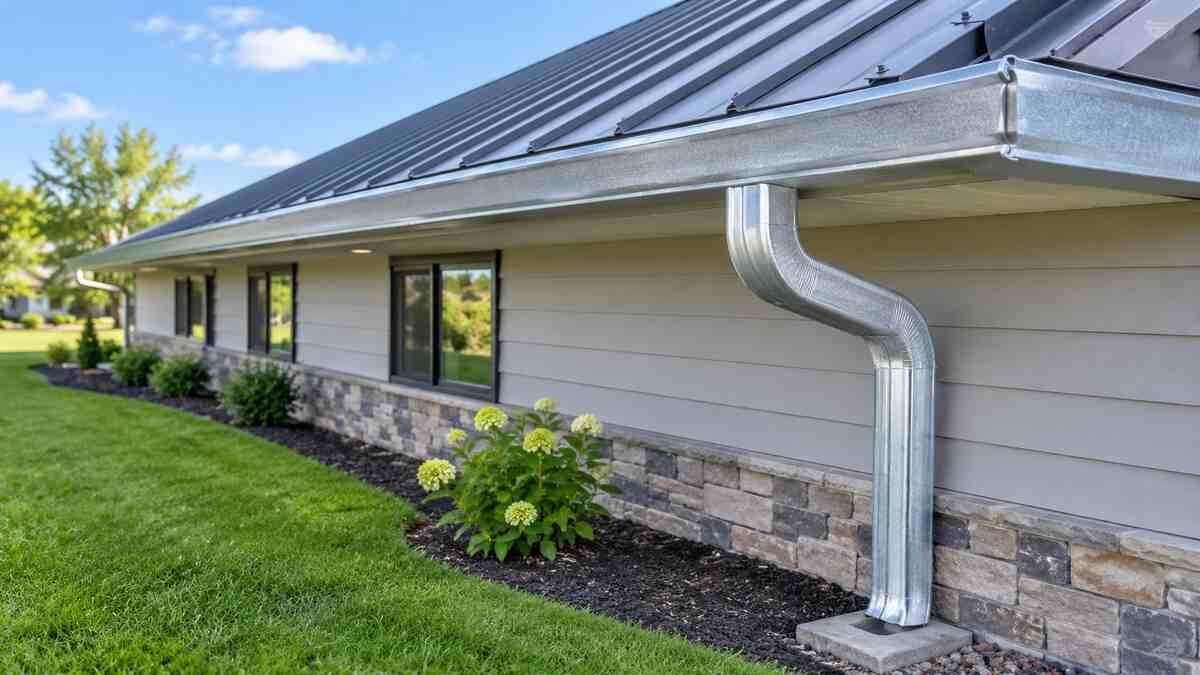
Galvalume gutters are steel gutters coated with an aluminum and zinc alloy. They last longer than plain galvanized steel, cost less than copper, and are stronger than most aluminum gutters. For many homeowners they sit in a useful middle spot, but they are not the right pick for every house or every climate.
This guide covers what the material is, how long it lasts, what it costs, where it fails, and how it compares to the other options on your list. By the end, you should know whether it fits your home.
What Are Galvalume Gutters?
Galvalume is a trade name for steel sheet coated with a mix of about 55% aluminum, 43.4% zinc and 1.6% silicon. The steel core gives the gutter strength. The coating keeps water and air away from the steel so it does not rust.
The material was first sold in the 1970s and is now common on metal roofs, siding and gutters. You will often see it called aluminum-zinc coated steel. Some contractors write it as “Galvalume steel” or “AZ coated steel,” and they all mean the same product.
How the Coating Works
The aluminum in the coating forms a hard, thin barrier on the surface. This barrier is what blocks moisture. The zinc adds a second layer of defense because it corrodes first when the surface is scratched or cut, which slows rust on the exposed steel edge.
Plain galvanized steel uses only zinc. Zinc alone wears away faster in rain and humidity, which is why Galvalume generally outlasts it by a good margin.
Raw Finish vs. Painted Finish
Raw Galvalume has a dull silver look with a faint crystal pattern called spangle. It looks fine on a modern or industrial home, but some people find it plain. Many suppliers also sell pre-painted Galvalume in white, brown, black, gray and bronze.
Painted coil usually has a baked-on finish. It protects the coating further and gives you color matching with trim and roofing. If looks matter to you, price out the painted version before you decide.
Galvalume Gutters Pros and Cons
Every gutter material makes trade-offs. Here is a plain look at where Galvalume does well and where it falls short.
Main Advantages
Strength is the biggest selling point. A 24 gauge steel gutter handles ice, heavy leaf loads and the occasional ladder lean better than the thin aluminum most builders install. Dents happen far less often.
Rust resistance is the next one. The alloy coating holds up well in rain, snow and normal humidity. Cost is also reasonable. Galvalume usually lands below copper and zinc and close to or slightly above mid-grade aluminum.
Some other benefits are worth knowing:
- It can be formed on site into seamless runs, which means fewer joints to leak
- Painted versions come with baked-on finishes that often carry a manufacturer warranty
- The material is fully recyclable at end of life
- Steel does not expand and contract as much as aluminum, so joints and fasteners tend to stay tighter through temperature swings
Main Drawbacks
Steel is heavier than aluminum, so the hangers and fascia must be in good shape. A gutter full of wet leaves and ice can weigh a lot. Installation also takes a bit more skill because the metal is stiffer to shape and cut.
Cut edges are the weak point. Once the steel core is exposed at a cut or a deep scratch, rust can start there if the spot is not sealed. This is the most common reason a Galvalume gutter fails early.
The material also reacts badly with some other products. Wet cement, mortar runoff, treated lumber and copper can all attack the coating. We cover those details in the mistakes section below.
How Long Do Galvalume Gutters Last?
Most Galvalume gutters last 20 to 30 years when installed and maintained well. Some manufacturers back the coating with warranties in that range, though the terms vary and often exclude damage from improper installation or chemical contact.
Climate changes the number. In dry or moderate regions the gutters can reach the high end. In places with heavy rain, standing water, acid rain or salty air, the lifespan drops. Coastal homes within a few miles of the ocean should look closely at the warranty fine print before buying steel of any kind.
What Shortens the Lifespan
Standing water is the number one enemy. Gutters that are not sloped correctly hold water in low spots, and that constant moisture wears down the coating from the inside. A drop of about a quarter inch per ten feet toward the downspout is the common rule.
Clogged gutters cause the same problem. Wet leaves sit against the metal, hold acid and moisture, and eat at the surface. Gutters that are cleaned twice a year last noticeably longer than ones that get ignored for five.
Signs a Gutter Is Nearing the End
Watch for orange or brown spots, especially at seams and cut ends. Peeling paint that exposes bare metal is another early warning. Small pinholes along the bottom of the trough mean the steel is going through.
Sagging sections and water spilling over the front edge in light rain also point to trouble. Fixing one small spot early is cheaper than replacing a long run later.
Galvalume Gutters Cost
Price depends on gauge, finish, local labor and how many corners and downspouts your house has. As a rough guide, many homeowners see installed prices of about $8 to $18 per linear foot for seamless Galvalume, though your area could be higher or lower. Always ask for written quotes.
For an average home with around 150 to 200 feet of gutter, that puts the full job in the low to mid thousands of dollars. Prices shift often, so treat any number you read online as a starting point and not a promise.
What Affects the Price
Gauge matters. Thicker steel costs more but resists dents and sagging. Painted coil adds to the price over raw metal. Roofs with several levels, steep pitches or hard to reach corners take more time, which pushes labor up.
Extras add up quickly. Leaf guards, larger 6 inch gutters, oversized downspouts and decorative hangers can each add a noticeable amount. Decide what you actually need before asking for quotes so you can compare bids fairly.
Is It Worth the Money?
If you plan to stay in the house for 15 years or more, the longer life and lower repair rate often justify the price. If you are selling in two years, a basic aluminum system may be enough. Buyers rarely pay extra for gutter material, but they do notice sagging or rusty ones.
Galvalume vs. Aluminum vs. Galvanized Steel Gutters
Most people reading about Galvalume are really comparing it to two other metals. The table in your head should look something like this: aluminum is light and rust proof, galvanized steel is cheap and strong, and Galvalume sits between them with better corrosion resistance than galvanized and more strength than aluminum.
Galvalume vs. Aluminum
Aluminum never rusts, which makes it a safer pick near the coast. It is also lighter and easier to install, and it comes in many colors. The downside is that it dents easily and can bend under heavy snow or a ladder.
Galvalume handles physical abuse better. If your trees drop branches, you get regular ice, or kids and ladders are common at your house, steel makes sense. If salt air is the main worry, aluminum usually wins.
Galvalume vs. Galvanized Steel
Both are steel with a metal coating, but the coating is different. Galvalume resists corrosion longer in most outdoor conditions, so it usually costs a little more and lasts longer. Galvanized is fine for budget projects, sheds and short term needs.
One thing that surprises people is how scratches behave. Galvanized zinc protects a scratch more actively, while Galvalume protects it less. This is why careful handling and touch up paint matter more with Galvalume.
Galvalume vs. Copper and Zinc
Copper and zinc gutters are premium products that can last 50 years or more, but they cost several times as much. They suit historic homes and high end builds. Galvalume gives you a metal look and solid durability for a fraction of the price, which is why it shows up on many modern and farmhouse style homes.
Common Mistakes to Avoid With Galvalume Gutters
Most early failures come from a few repeat errors, not from the material itself. Knowing them before the crew arrives can save you real money.
Mixing Metals
Never let Galvalume touch copper, either directly or through water running from a copper roof or flashing. The two metals set up a reaction called galvanic corrosion, and the Galvalume loses. Use fasteners made for the material, since plain steel screws or the wrong coated hardware can start rust at every hole.
Ignoring Cut Edges
Every cut end should be sealed or touched up with a compatible paint or sealant. Installers who skip this step save a few minutes and leave you with rust at the seam a few years later. Ask your installer how they treat cut edges, and look at the ends yourself after the job.
Letting Runoff Hit Bad Surfaces
Gutter water should not drain onto fresh concrete or mortar, since the alkaline wash can attack the coating. Treated lumber can also cause trouble when wet and in constant contact. Keep downspout ends clear of these surfaces or use extensions.
One more tip from real jobs: check the fascia board before hanging heavy steel. Soft or rotting wood will not hold the weight, and the gutter will pull away within a season or two.
How to Maintain Galvalume Gutters
Maintenance is simple, and a little effort goes a long way. Clean the gutters at least twice a year, in late spring and late fall. If you have many trees close to the house, add a third cleaning.
Cleaning and Inspection Routine
Scoop out debris by hand or with a plastic scoop, then flush the run with a hose. Watch the water as it moves. Slow drains or pooling water show you where the slope is off or where a clog is hiding in the downspout.
Walk the full length and look for scratches, chips and rust spots. Use a plastic or soft bristle brush when scrubbing. Steel wool and wire brushes scrape off the coating and create new problems.
Repairing Small Spots
If you find a tiny rust patch, clean it with a soft brush, dry the area and apply a zinc rich primer made for coated steel. Finish with a matching exterior paint. Do this as soon as you see it, because rust spreads fast once water gets under the coating.
Sealant at the seams should be checked every few years. Dried or cracked sealant is a common source of drips, and replacing it takes only a small tube and a short afternoon.
Is Galvalume the Right Choice for Your Home?
Galvalume works well for homeowners who want a tougher gutter than basic aluminum without paying copper prices. It suits areas with snow, ice and heavy debris, and it pairs nicely with metal roofs, since many of those roofs use the same coated steel.
It is less ideal for homes right on the ocean, for houses with copper roofing, and for anyone who wants a maintenance free system. In those cases, look at aluminum, vinyl or a premium metal instead.
Questions to Ask Your Installer
Before signing a contract, ask these:
- What gauge is the steel, and is it 24 or 26?
- Is the coil prepainted, and what is the finish warranty?
- How do you seal cut ends and seams?
- What hangers and fasteners will you use, and how far apart will they be?
- Will you cut the gutters on site from a roll or install pre-made sections?
Clear answers to these tell you a lot about how careful the crew will be. Vague answers are a sign to keep shopping.
FAQs
Do Galvalume gutters rust?
They resist rust well, but they can rust at cut edges, deep scratches and spots where water sits. Sealing the ends and fixing small damage early keeps rust from spreading.
Are Galvalume gutters better than aluminum?
They are stronger and resist dents better. Aluminum is lighter and does better near salt water. The right choice depends on your weather, tree cover and budget.
How much do Galvalume gutters cost per foot?
Installed prices often fall between $8 and $18 per linear foot, depending on gauge, finish and your location. Get at least three written quotes to see the going rate in your area.
Can you paint Galvalume gutters?
Yes, but the surface needs the right primer first because paint does not stick well to the raw alloy. Many people choose factory painted coil instead, which saves the trouble and usually lasts longer.
Can Galvalume be used with copper downspouts or flashing?
It should not touch copper. The two metals react when wet, and the Galvalume corrodes faster. Use compatible materials throughout the system.
How long is the warranty on Galvalume gutters?
Coating warranties from manufacturers commonly run 20 to 30 years, while installer workmanship warranties are shorter. Read the exclusions, since many void coverage for improper installation or chemical contact.
Final Thoughts
Galvalume gutters make sense if you want strength, a clean metal look and a fair price, as long as your home is not in a harsh salt air zone. Compare two or three written quotes, ask the questions above, and check the warranty terms before you commit.